In the default datasets for 2016-18, we take the profiles affected by the weather (e.g. temperature, wind, insolation) as they were in those years. As already mentioned, these years were marginally above the average temperature, but not exceptional.
The last exceptionally cold year in the UK was 2010, and even that was only exceptional to its surrounding decades, but not especially exceptional on a long-term comparison.
Although many years have been above the long-term average recently, we have not had an exceptionally hot (in summer) / mild (in winter) year within the period for which granular data is easily accessible.
The weather has many aspects that affect energy systems differently. Warmth in winter reduces energy demand (i.e. less heating required), but in summer it increases demand (more cooling). Wind, sunshine and rain can also affect demand, and their timing has a significant bearing on the availability of certain technologies. A windy year may be helpful (if the wind coincides with the periods of high demand) or unhelpful (if the wind coincides with the periods of low demand). We cannot test multiple factors simultaneously, so we focus on the effect of temperatures in these variations.
The correlations are small (positive or negative) to non-existent. One cannot assume that a year whose weather is helpful or harmful in one regard will be helpful or harmful in others. They may cancel out, or they may amplify.
For the purposes of testing sensitivities, we synthesise demand profiles based on the raw data for the three years 2016-2018 (e.g. peaks and troughs occur according to the timing in those years), but amplify the unhelpful extremes in the “severe” profile and dampen them in the “mild” profile. For example, the “severe” profile assumes it’s both a cold winter needing a lot of heat, and a hot summer needing a lot of cooling. The “mild” profile assumes the opposite. The amplification/damping is scaled to produce the levels of energy consumption seen in years with severe or mild winters and the temperatures seen in severe or mild summers.
These are therefore artificial profiles and do not reflect conditions that actually happened. But, as they are a significant factor, it is important to test for the impact of weather extremes. And as actual granular data is not available, this was the least-bad solution that we were able to devise. It is hopefully a reasonable stress test, though not a set of conditions that have occurred nor are likely to occur in exactly this form.
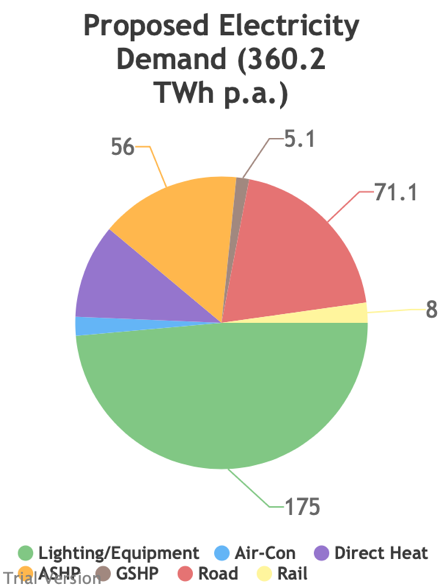
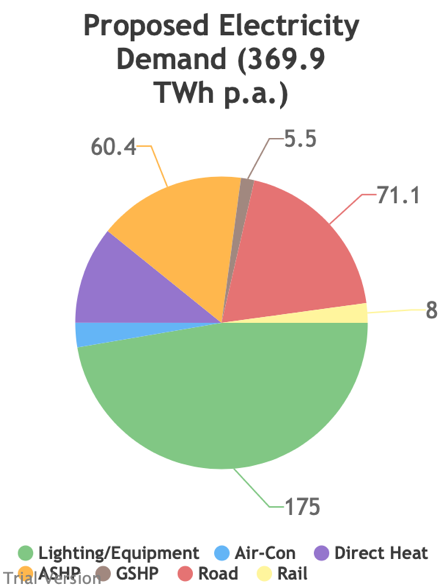
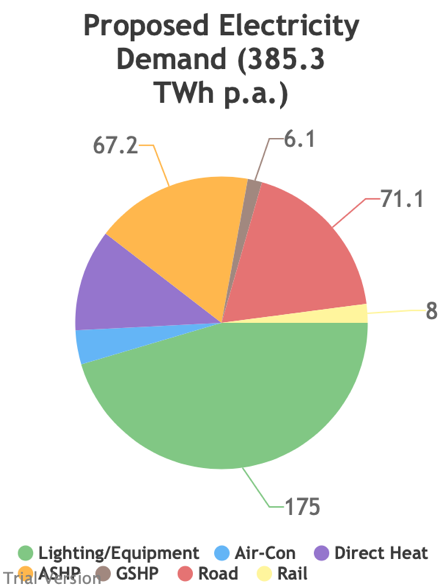
Temperatures make a material, but in this scenario not massive (±4%), difference to the annual demand for electricity. Remember, this scenario assumes only one-third of heat has been electrified.
Mild
Normal
Severe
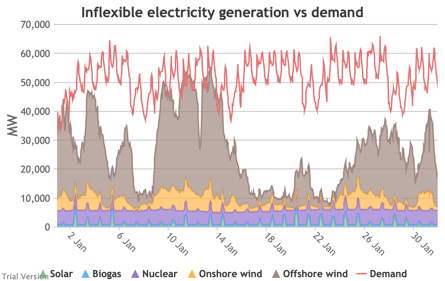
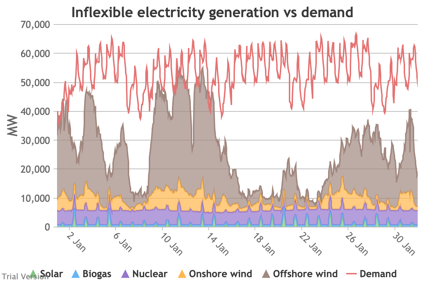
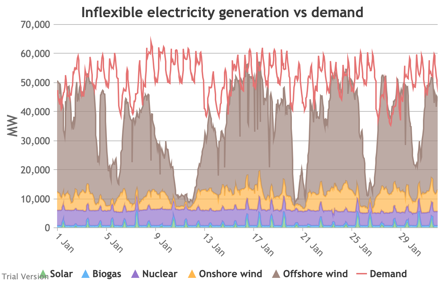
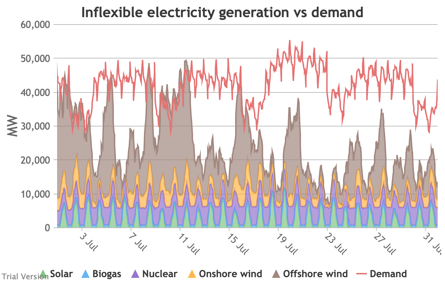
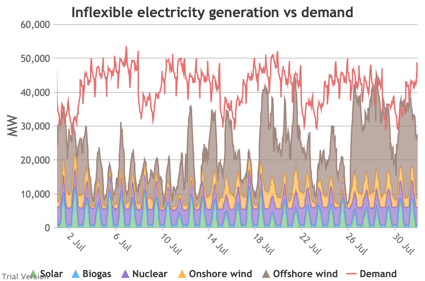
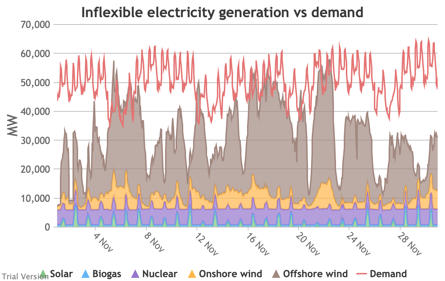
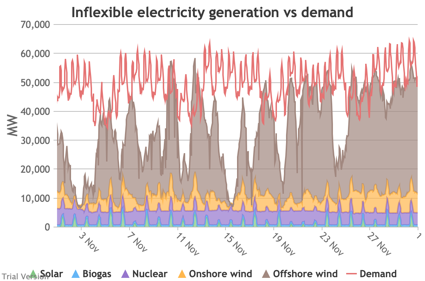
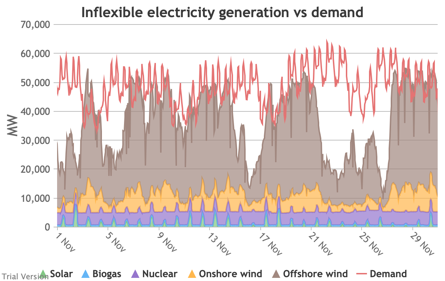
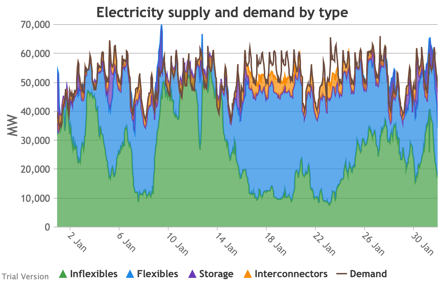
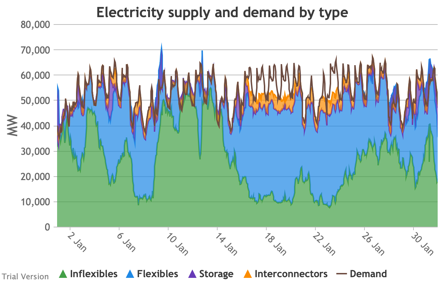
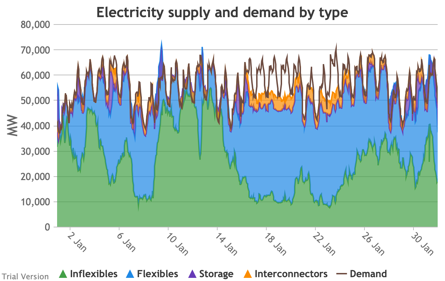
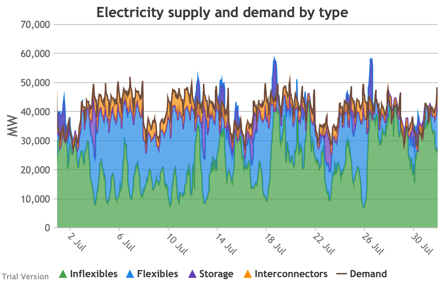
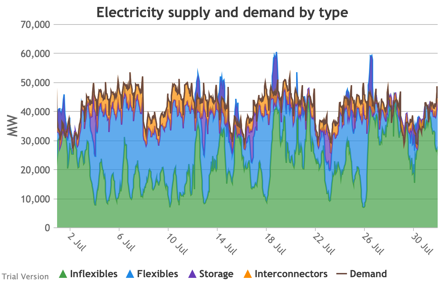
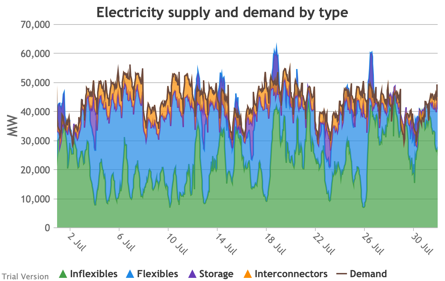
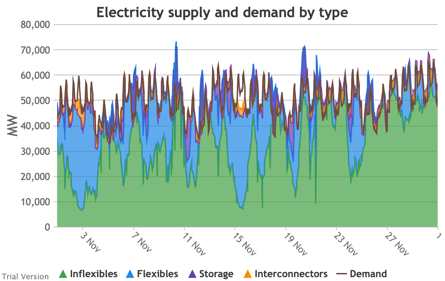
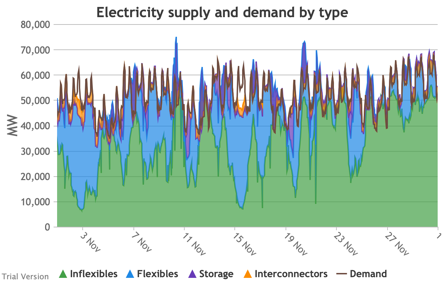
You need to look closely to spot the differences in the comparison of inflexible generation with wholesale demand. The difference is primarily in the red line (demand), which is higher to the right.
Mild
Normal
Severe
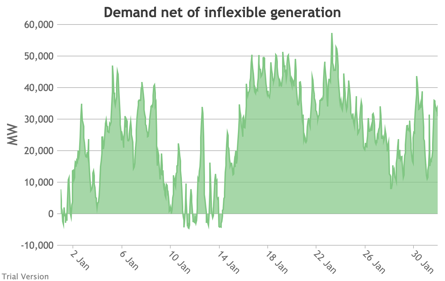
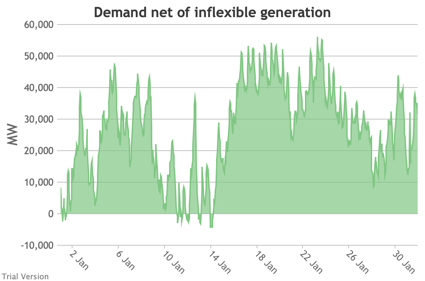
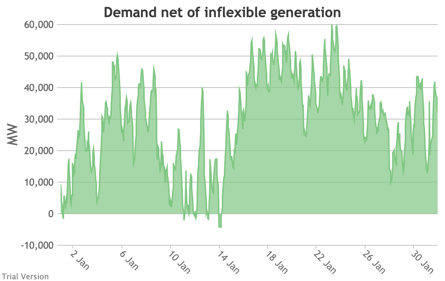
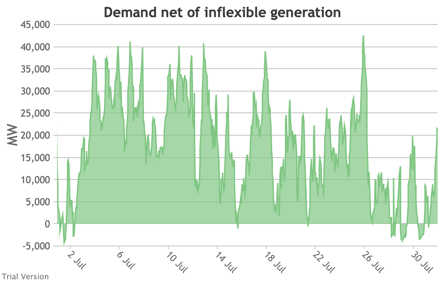
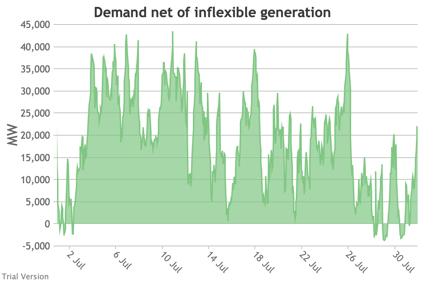
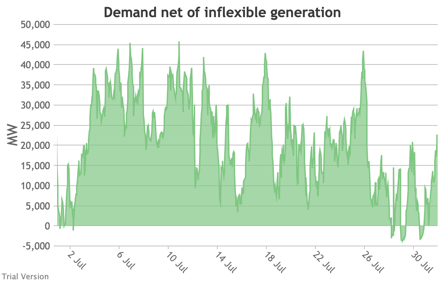
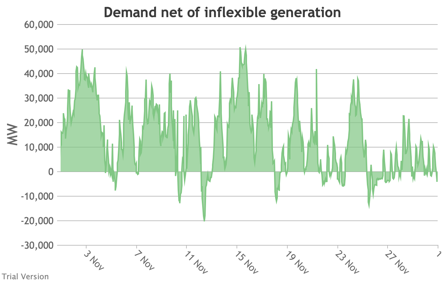
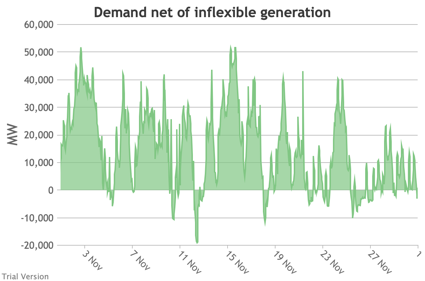
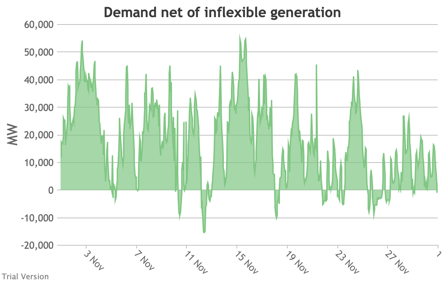
The effect of the weather is more visible in the following charts of demand net of inflexibles. In the first row (Jan) for instance, the highest peaks are clearly higher on the right than the left, and the periods of negative demand (excess inflexible generation) are smaller on the right than the left.
The system in this scenario needs to be able to cope with periods where we need 60 GW from storage, interconnectors and flexible generators, not just the 55 GW at which it maxes out in normal conditions. If the system is designed accordingly, then there will be more excess capacity in mild and normal years than would be the case if the system were designed to cope with no more than a typical year.
Conversely, there is also a choice to be made between sufficient storage to absorb the excess even in mild years, or basing storage capacity on the needs of a normal year, in which case some excess output will be wasted in mild years, and not enough will be stored up for the extreme periods in severe years.
The discrepancies are small in this scenario, but the diminishing marginal returns on these edge cases already illustrate the economic fallacy of aiming for Net Zero. They become severe as the system becomes exponentially more stressed as decarbonisation deepens.
Mild
Normal
Severe
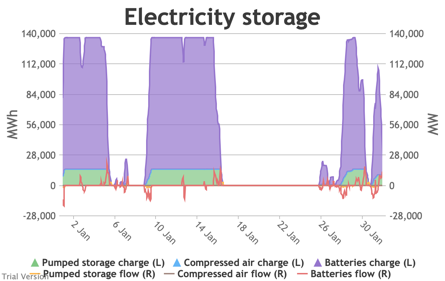
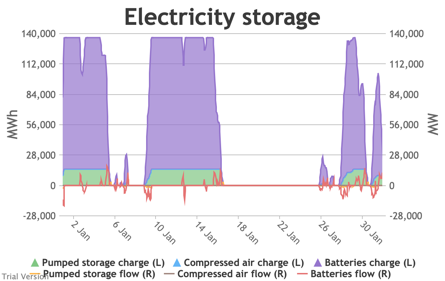
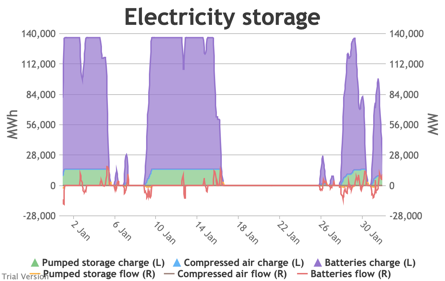
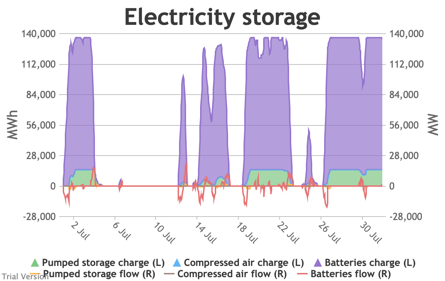
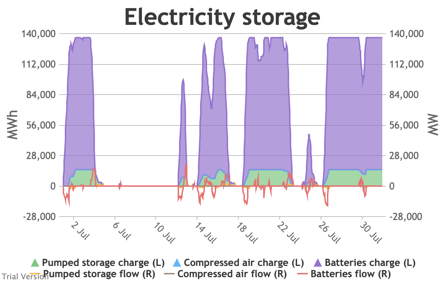
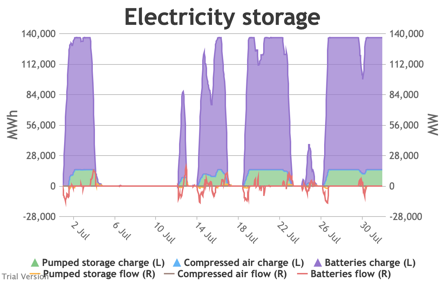
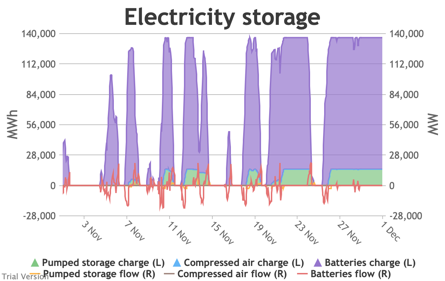
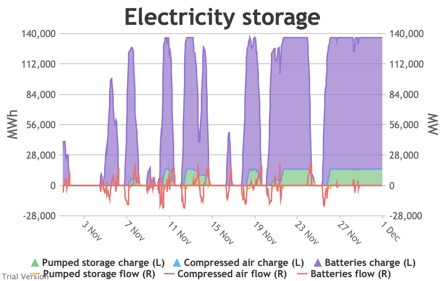
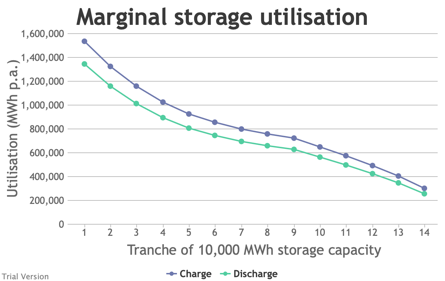
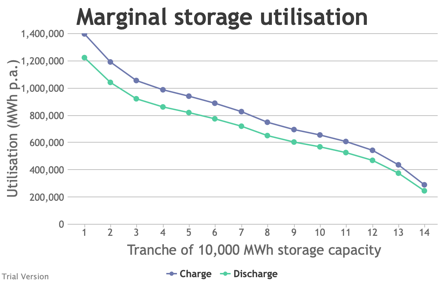
The differences in the usage of the storage capacity are subtle. That is because this scenario deliberately chose a ratio of MW to MWh that implied high frequency, short-term storage, so the potential to store the bigger peaks or to keep supplying the longer shortfalls is very limited. Nevertheless, you can see small differences.
Mild
Normal
Severe
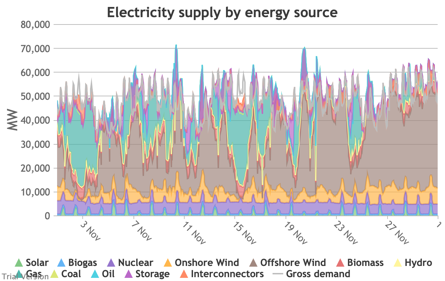
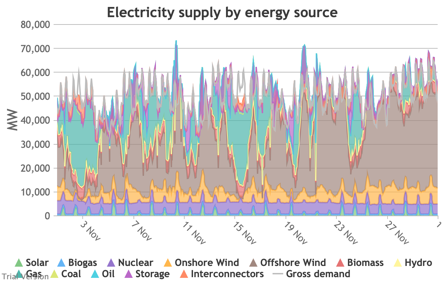
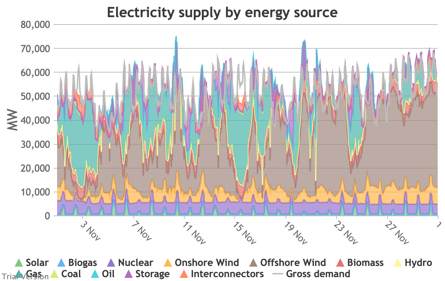
Again, small differences are just about discernible in the charts of electricity supply by type. The deficit periods are clearly exacerbated in severe conditions.
Mild
Normal
Severe
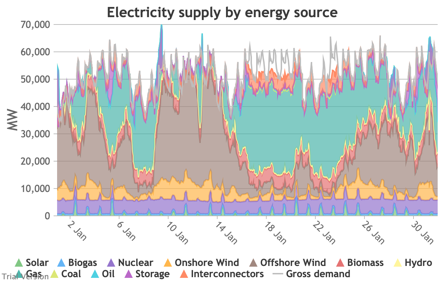
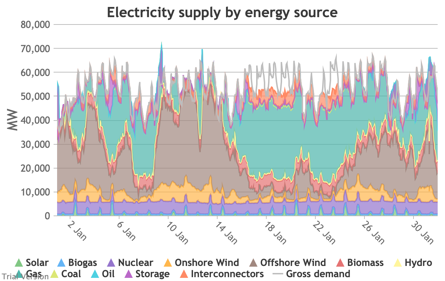
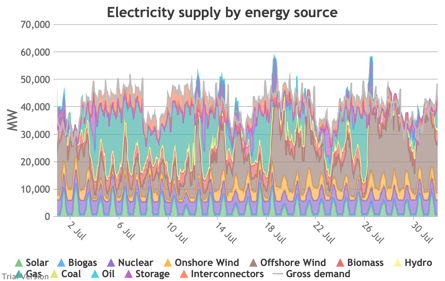
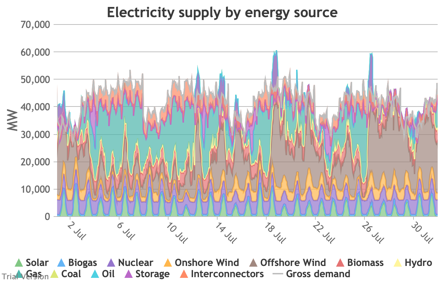
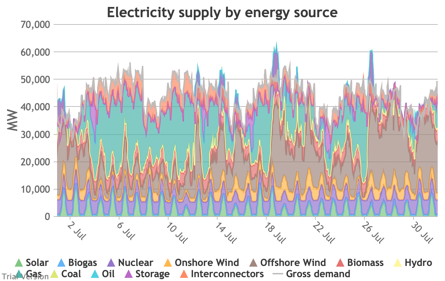
Likewise for the charts of electricity supply by source (i.e. technology):
Mild
Normal
Severe
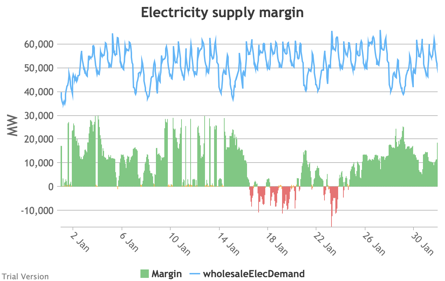
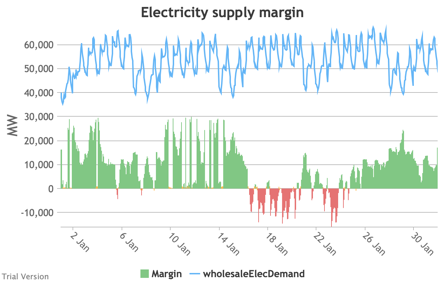
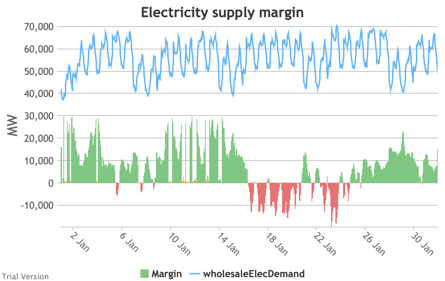
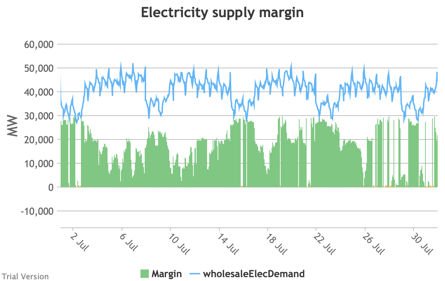
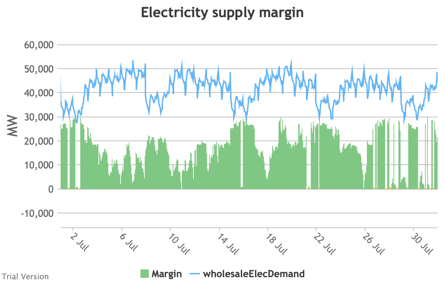
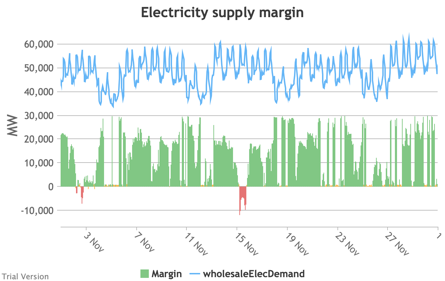
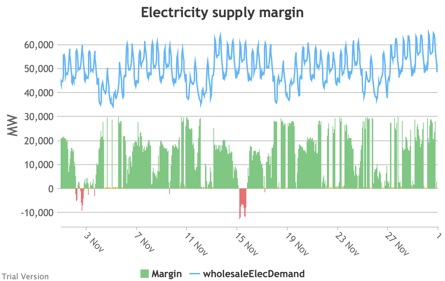
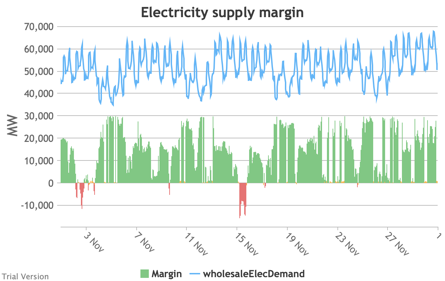
That feeds through to the electricity supply margin.
Mild
Normal
Severe
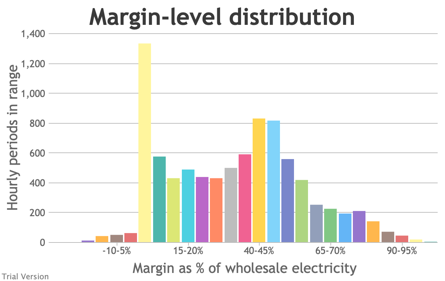
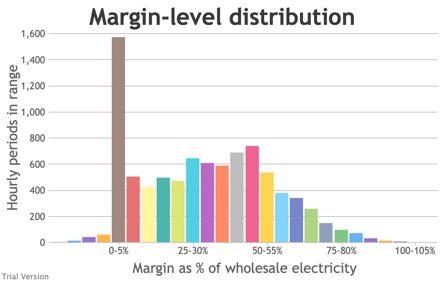
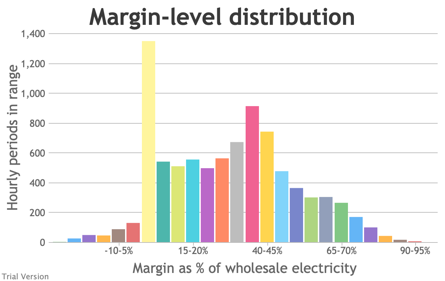
The differences are also subtle but visible in the aggregate contributions of technologies and in the distribution of the electricity supply margin.
Mild
Normal
Severe
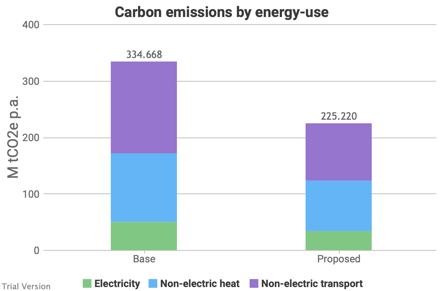
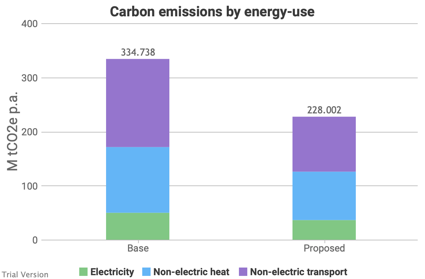
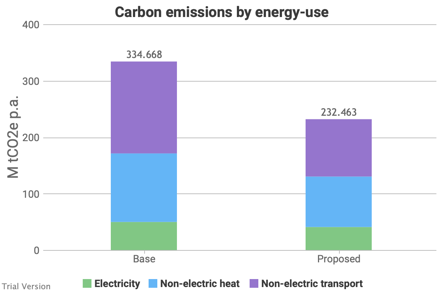
Likewise, the differences in carbon impact are small. Of course, a cold winter and hot summer emit a little more carbon than a mild winter and summer, because we have not fully electrified and decarbonised in this scenario.
Mild
Normal
Severe
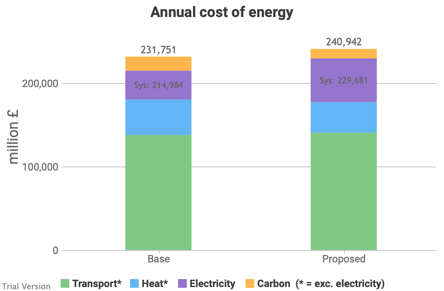
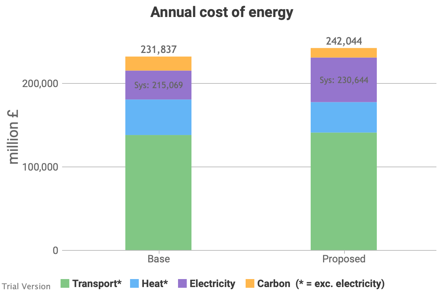
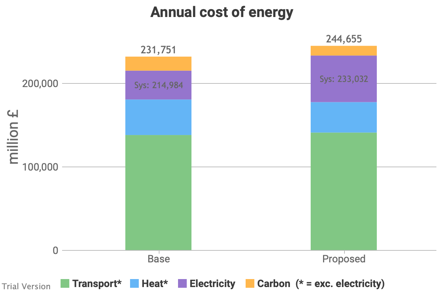
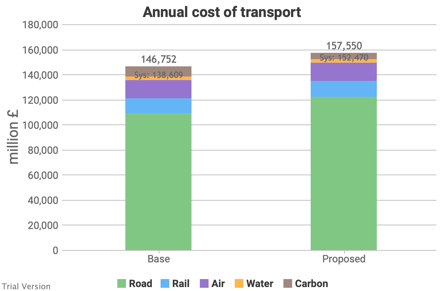
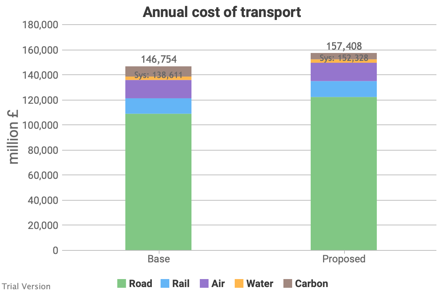
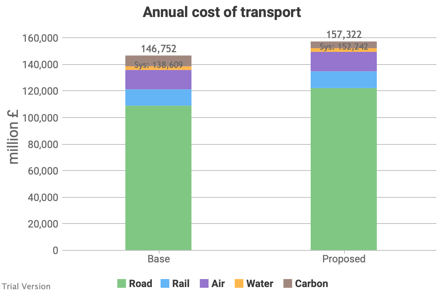
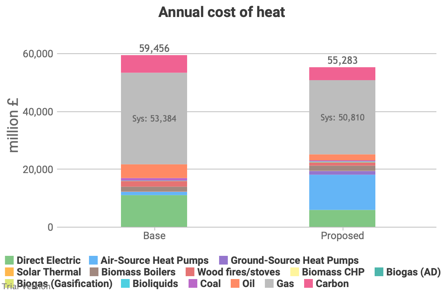
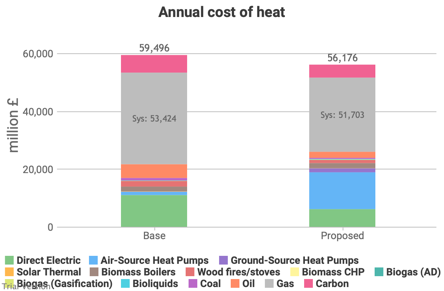
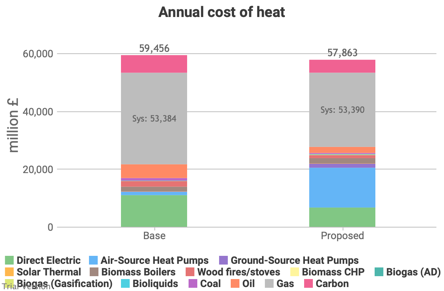
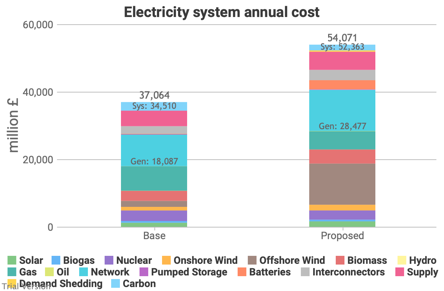
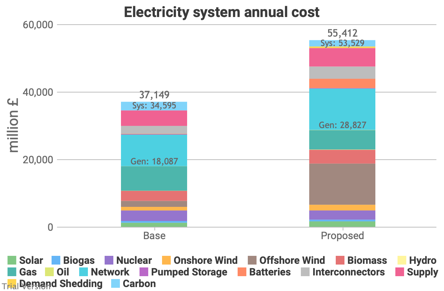
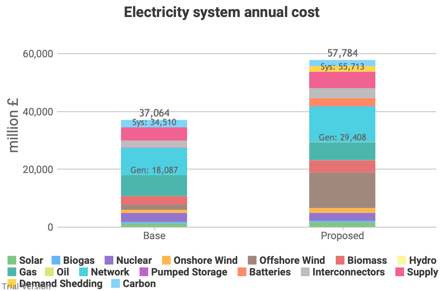
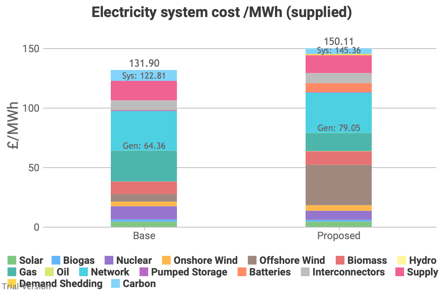
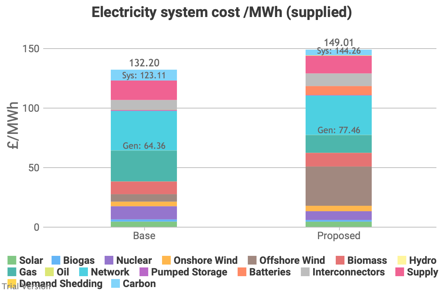
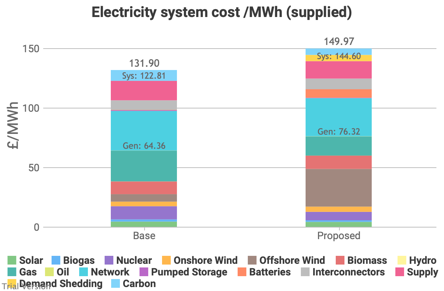
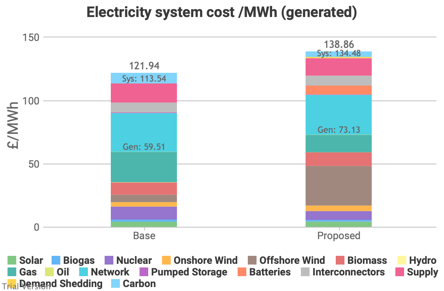
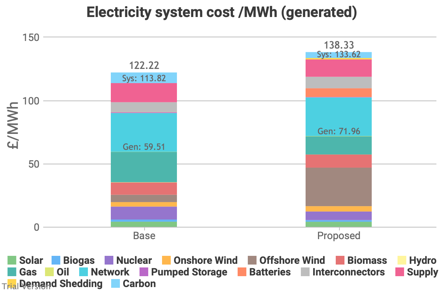
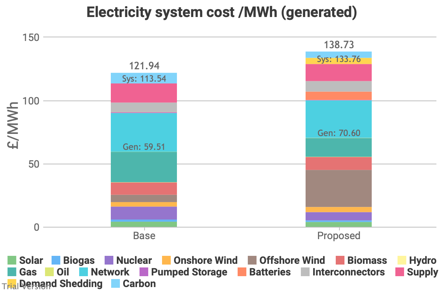
The severity of the weather has a detectable impact on annual costs.
Mild
Normal
Severe
Extreme weather (in both directions, severe or mild) increases the cost of energy. For severe weather, it increases the strains on the system and pushes at the supply margins. For mild weather, capacity is under-utilised, which increases the cost per unit, even though the total cost falls.
Under no conditions is the increase in the overall cost justified by the reduction in the cost of carbon at £50/tCO2e. If these measures are justified, they imply a cost of carbon of around £150/tCO2e, in which case, what other measures would have been justified had we proceded by carbon-pricing rather than winner-picking?
Significantly, the cost of demand-shedding increases from £378m in mild conditions, to £669m in normal conditions, to £2,011m in severe conditions. The system is fragile to unusual conditions, because margins are very tight. Tight margins give the impression of offering good value by avoiding under-utilised investment, but are a false economy if resilience is a significant consideration, as it should be for energy systems. The true cost of a resilient system at this level of decarbonisation would be higher. And it may involve more fossil-fired reserve (contrary to the intent of policy), as we will explore in the next sensitivities.