
C4CS analysis
Against Sweating for Virtue
I am loving this weather.
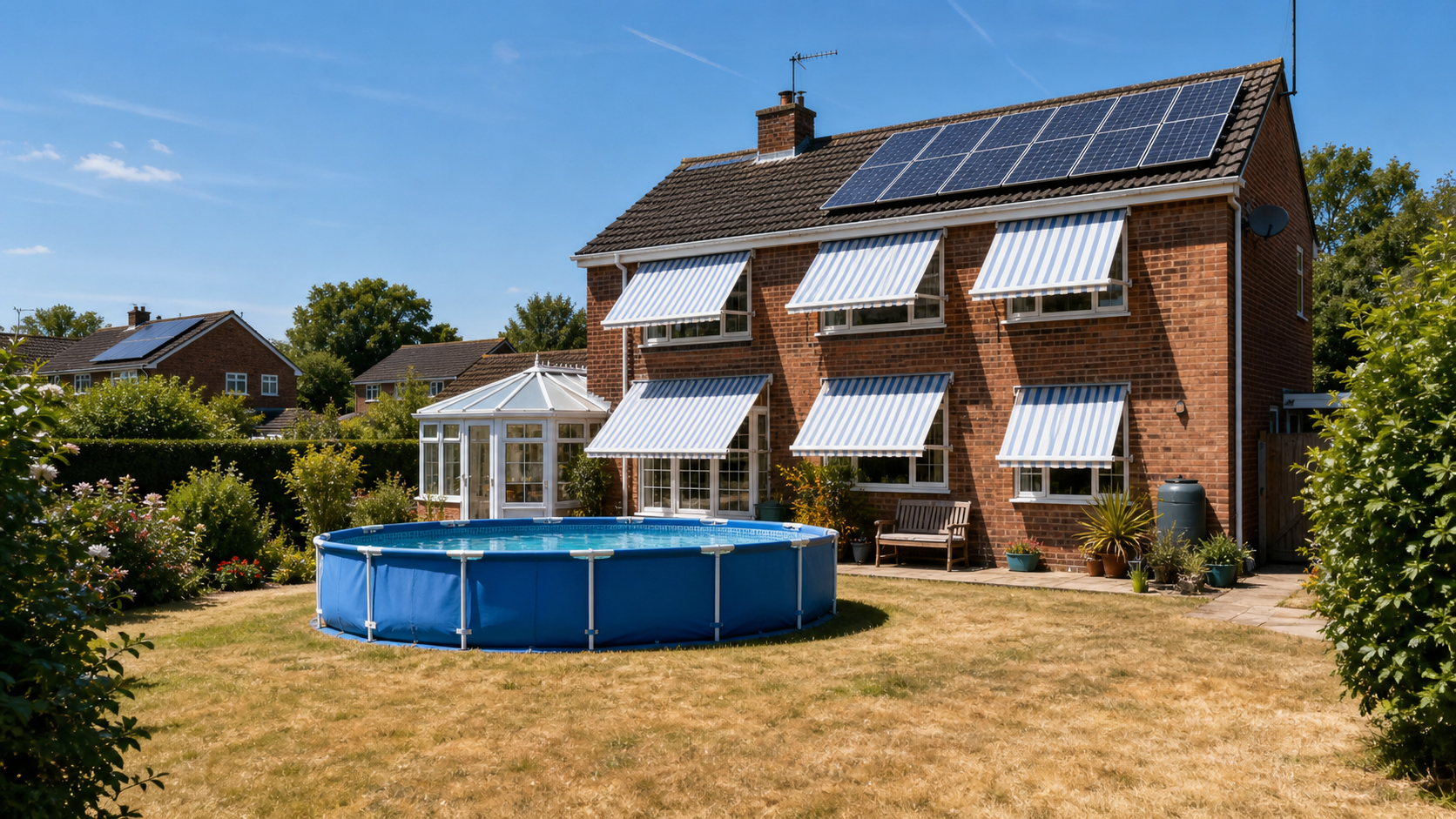
I wake up to the comfort of whole-house cooling. I drive to work in an air-conditioned car. The whole office is cooled with solar-powered air conditioning, so no excuses for slacking off. After work it’s watersports at the local gravel pits or splashing with the kids in our cheap solar-heated above-ground swimming pool. Then back to a cool bedroom, a proper night’s sleep, and repeat.
I hesitated to post this because it sounds like revelling in my privilege. Plenty of people are enduring sleepless nights and trying to work in buildings that feel like pizza ovens.
But that’s why it’s important to discuss that it doesn’t have to be that way.
In Britain, we’ve somehow decided that overheating is an unavoidable act of nature. It isn’t. It’s mostly the consequence of the persistently low position of climate control in people’s utility functions outside the hot days when it’s too late to do anything about it.
Economists call it opportunity cost. Every decision to spend money on one thing is a decision not to spend it on something else. When you choose to spend money on other things, you reveal that you value them more than climate control, whatever you declare when it’s hot. And not just monetary cost. Part of the opportunity cost of not investing in climate control is your discomfort and reduced productivity. If you don’t spend the money, you are saying that none of that matters as much to you as the things you spend your money on.
Sometimes those choices aren’t made by the people suffering today. Most tenants can’t make the necessary improvements. Some homeowners cannot afford to. Responsibility may lie with landlords, managers, planning restrictions, housing shortages, or decades of managerialist policies that have left people too restricted or poor to invest in resilience.
But those are choices too. Choices made by property owners, politicians and, in a democracy, electorates that would rather believe trade-offs can somehow be avoided.
Effective measures don’t have to be expensive, but you have to know what is worth spending money on. Fans are an admission that you didn’t bother taking proper measures in advance. Insulation can help keep the heat out if it has no other way in, but most heat is going to arrive through the windows as solar gain, not through the walls, and if that happens, insulation is going to keep the heat in, not out. What works are external shutters and other shading to prevent solar gain, and above all air conditioning.
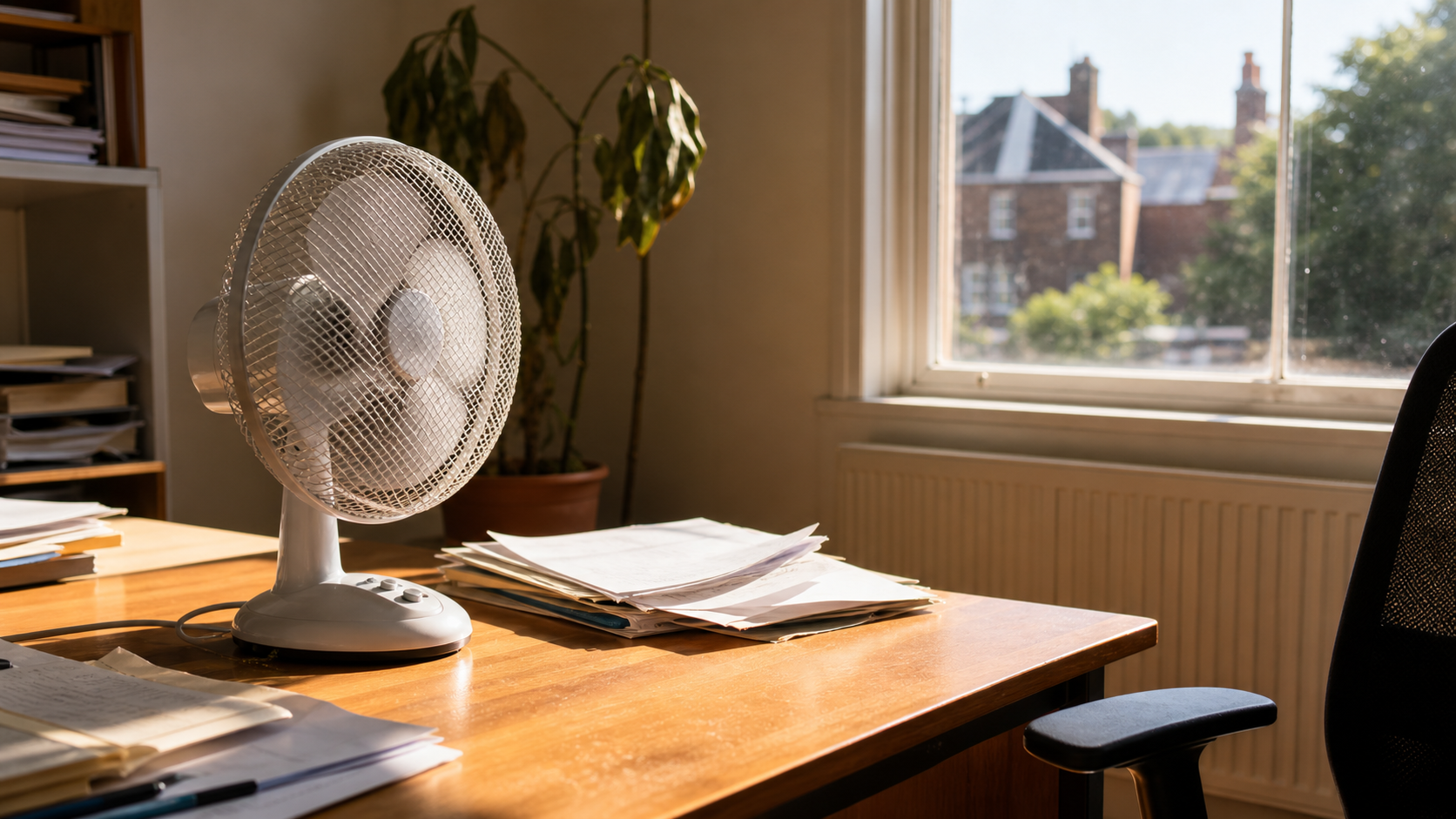
Although air conditioning is ubiquitous in regions accustomed to heat and is the main practical and cost-effective use for (green) solar energy, many in the UK regard it as a privilege or an unacceptable environmental cost.
Heat pump policy is one illustration that the British state causes more harm by what it does than what it costs (that’s why cutting tax without cutting the scope of government is not only fiscally irresponsible, but entirely missing the point, Liz). Most heat pumps can be operated in reverse mode to provide chilled water for cooling. The British state has been trying to encourage people to install heat pumps for 25 years, and for most of that time, it has actively penalised or prevented people from using them for cooling. Consequently, few heat pumps are installed as reversible systems, the additional equipment needed for cooling (which is commonplace and cheap in China and America) is rare and expensive in the UK, and heat pump uptake persistently struggles because people don’t see one of its main benefits.
When I installed my first heat pump in 2003, I was obliged to disable the switch that could put it into reverse mode if I wanted the Clear Skies grant. I decided they could shove their grant where the sun don’t shine, and went for that whole-house cooling that is keeping us so comfortable to this day.
Swimming pools are seen as a similar privilege. In the UK, people assume a swimming pool is a hole in the ground in a garden big enough to take it. That kind of pool costs tens of thousands of pounds if you’re lucky enough to have the space. In the US, they are affordable to many more people simply because they are richer, and a wider, deeper market achieves efficiencies. And those who can’t afford that will often have in their “yard” the cheap alternative that I’ve got - effectively a giant paddling pool. You get 80% of the utility at a fraction of the cost. You can swim in ones that cost under £1,000, and small ones for splashing and cooling can be had for £150. Don’t believe me? Look up “Intex pool” on Amazon.
Anyway, the point isn’t to buy what I bought.
The point is to decide what matters before you need it.
The same applies to employers. If your staff spend a week every summer trying to work in a sauna, that wasn’t an unavoidable consequence of climate. It was a business decision deferred for another year.
Schools face the same question. If children are expected to learn in classrooms that become ovens, or lessons are abandoned altogether, someone decided that other priorities mattered more than giving children and teachers an environment where they could actually think.
Hospitals are reportedly struggling and MPs are asking the government what they are going to do about it. This isn’t an unforeseeable circumstance. If hospitals weren’t managed to anticipate and deal with it, you might think that the centrally-managed and publicly-funded healthcare system was part of the problem, not the solution.
There’s a Swedish saying: “There is no such thing as bad weather, only the wrong clothes.”
I’d update it.
There is no such thing as bad weather, only the wrong preparation.
Britain’s problem isn’t the weather. It’s that we have normalised failing to prepare for it.
One reason my opening sounds like privilege to British ears is that Britain is an outlier.
Southern Europe is hotter. Texas is hotter. Singapore is hotter.
Yet in much of the developed world, air conditioning is ordinary. External shutters are ordinary. Offices that remain productive in summer are ordinary. Homes where people sleep properly are ordinary.
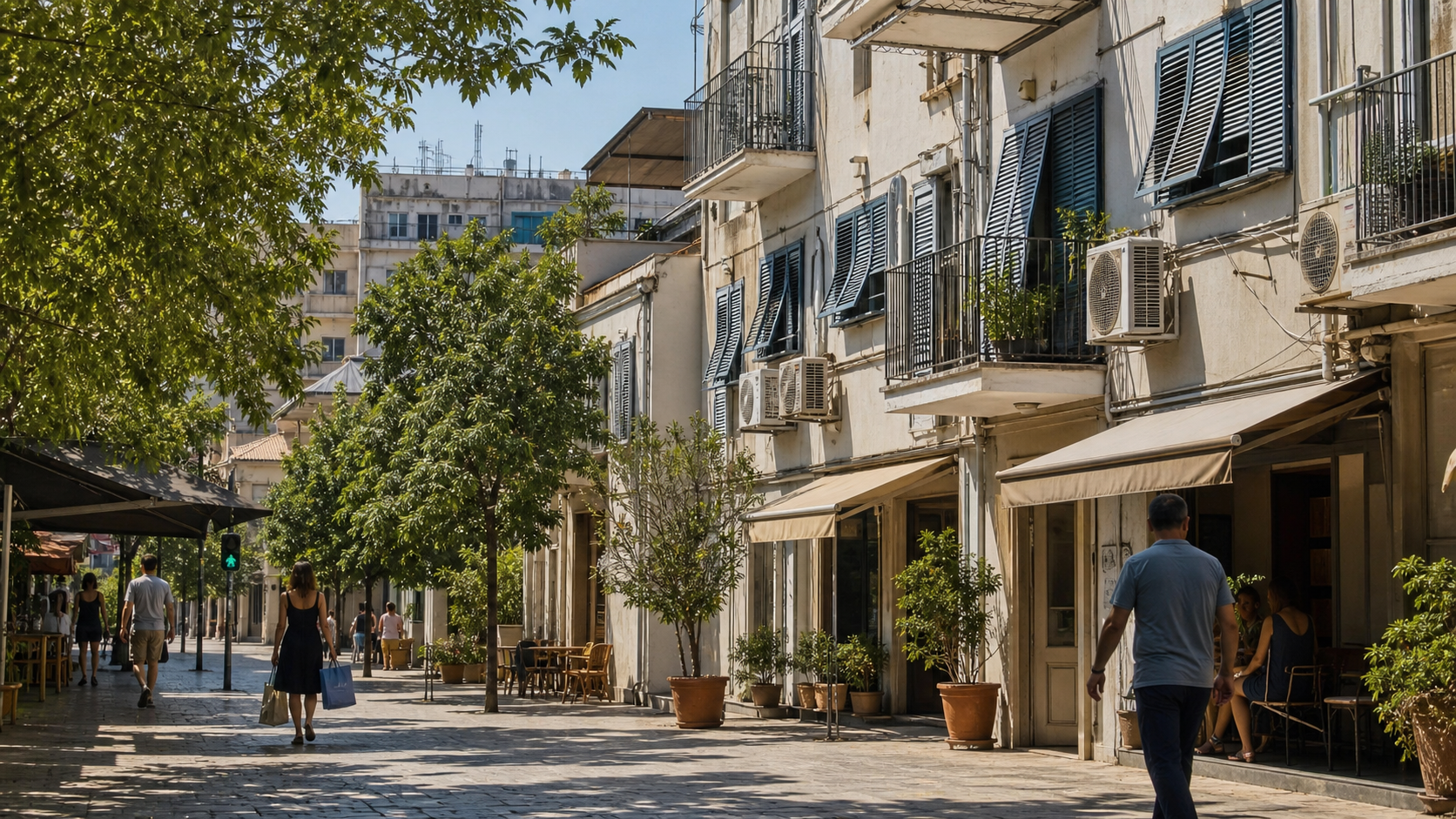
Britain doesn’t have a climate problem. It has a prosperity problem. We’ve become so accustomed to consumer goods remaining luxury goods that we’ve started describing them as unnecessary.
That’s what economic stagnation looks like. Technologies that become everyday consumer goods elsewhere remain status symbols here.
And the consequences aren’t abstract.
It means your grandmother trying to sleep through another tropical night in a stifling bedroom. Sometimes, it means she doesn’t wake up.
It means businesses quietly losing productivity every summer while pretending nothing can be done.
It means children sitting in classrooms too hot to concentrate, or being sent home, forcing you to take time off work, if your employer’s failure to prepare hadn’t already done that.
We tell ourselves this is the price of fairness, or planning, or protecting people from markets.
In reality, slower growth doesn’t abolish privilege. It just ensures that comfort remains a privilege for longer.
This, incidentally, is what planning really is.
Not bureaucrats in Whitehall trying to anticipate the needs of 70 million strangers.
Planning starts with the little “we”: our families, our colleagues, our customers, our pupils. We know what they need. We have the strongest incentive to provide it. The cumulative effect of millions of people making sensible plans for the people they actually know will always outperform one grand national plan.
Heatwaves don’t expose the failure of markets.
They expose what happens when we outsource planning to bureaucracy.